


Radiohead - OK Computer
- Foxtrotter

- Nov 16, 2022
- 7 min read
Updated: Nov 17, 2022
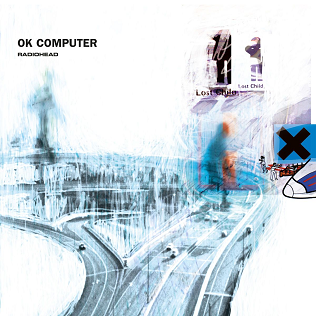
Radiohead are an English quintet founded in Oxfordshire in 1985 by Thom Yorke (vocals), Johnny Greenwood (lead guitar), Colin Greenwood (bass), Ed O'Brien (guitar), Philip Selway (percussion). Despite the classic rock formation, all the members often play other instruments, such as keyboards and strings; they are also characterised by their heavy use of electronic devices as well as complex production techniques, which is part of what makes the band so creatively unique. Radiohead are widely regarded as one of the most experimental bands in the genres of alternative rock and art rock, having explored a variety of different sounds. OK Computer was the follow up to their sophomore album, The Bends, which was noted for its mix of britpop and grunge, and found itself in several end-of-year lists. Ok Computer, however, was the album that set Radiohead apart from every other 90s alt rock band; it is their most famous album and considered by many as one of the best albums ever made.
Airbag - Opening the album, with the guitar fully panned to the left until Thom's vocals kick in –"in the next world war, in a jackknifed juggernaut, i am born again"–, the track sets the dystopian themes of OK Computer. It also ushers in the warm guitar tones used throughout, which are contrasted with very prominent drums while including those experimental but chaotic moments, steeped in frustration and distortion, which consistently appear during the album.
Paranoid Android - While being their second longest recorded song, totalling at six minutes and a half, it showcases perfectly Radiohead's repertoire. With four different sections (one being repeated), it begins by drawing attention to Thom Yorke's vocals and how effortlessly he can drift into a falsetto and back to normal register. This is followed by a heavier segment reminiscent of The Bends; Thom proceeds to snarl out every lyric as the calm acoustic guitars quickly switch to aggressive electric ones. After the sudden spike in volume, we get an instrumental section, which repeats at the end, lead by one of their punchiest basslines and surrounded by discordant guitars and drums matching this chaos. The next part is much calmer, but instead reveals how intricate Radiohead's production can be, perfectly overlapping several different vocal tracks recorded by Thom to create some of the most beautiful moments on the entire album. In general, I feel as though most Radiohead tracks would fit into one of those three segments above, making this song one of the best to display Radiohead's many facets. Subterranean Homesick Alien - While the title is a clear nod to Bob Dylan's Subterranean Homesick Blues it doesn't share anything else in common with it. Nevertheless, it is lyrically compelling in the way it talks of feeling isolated, longing for a further meaning to life . This is nicely accompanied by a spacey atmosphere, filled with psychedelic guitar notes and twinkles. His vocals at times sound mildly broken, however this simply adds to the feeling of despair.
Exit Music (for a Film) - Originally written for the 1996 film Romeo + Juliet, it ended up being swapped for a remix of Talk Show Host, a B-side of The Bends; however, Exit Music still found its place in the ending credits of the film. Although this song first appears as a classic acoustic ballad, albeit a very good one, the true jewel awaits later in the track. First comes a sudden drum fill, immediately followed by a very distorted bass, with Thom Yorke providing the true climax to the song, as he erupts both emotionally and vocally; this change of dynamics provides one of the most striking and emotionally intense moments on the entire record.
Let Down - This track has a particular ability to envelope your surroundings and drown you in its repeating melodies. There aren't many things that stand out on their own, but every element mixes perfectly with the others, shown by the continuous addition of new layers, notably the backing vocals in the last few lines of the song, making it unforgettable. Karma Police - Starting with just a simple acoustic guitar and a piano, this song is one of the most memorable of the album. The main verse is very catchy, with an easy to follow rhythm, and eye-catching lyrical expressions, –"he talks in maths, he buzzes like a fridge, he's like a detuned radio"–,which are contrasted by darker undertones with the character setting the "karma police" on people that annoy him. However, what sets this song apart is the outro; it was the result of Thom Yorke and Nigel Godrich, the producer, experimenting with effects and loops that create a cascading effect. This would later determine a big part of what made Radiohead so acclaimed, and is a true show of how experimentally groundbreaking they could be.
Fitter Happier - While many will discard this as the worst song on the album, which is perfectly acceptable as it is simply an interlude track, it is also an essential song in the album, key to the understanding of the concept behind it. This is a very different track to the rest, composed only of the synthesised voice of a Macintosh computer, reciting the lyrics supported by very stripped-back instrumentals occupied by random noises, synths, and pianos. On the surface it may seem as a throw-away track that doesn't even include real vocals. However it creates an entire atmosphere that is representative of the entire album; because in truth it is unnerving, it is depressing, it is overflowing with the aura of a sci-fi world, it is Ok Computer.
Electioneering - By far the most rock orientated track on the album, and one of the most of their entire career, it is defined by a vibrant electric guitar and a cowbell. Thom Yorke's vocal delivery is quite aggressive, which matches very well with the song's political message. Despite this, it feels a bit out of place, as it hasn't got the same degree of sadness and hopelessness that the album is built upon; instead it has a faster and noisier nature, sounding more like a song from Pablo Honey or The Bends. On the other hand, its political nature is closer to Hail to the Thief than anything else.
Climbing Up the Walls - One of the slower songs on the album, but also one of the most chaotic, it is the only song on the entire record that includes strings (sixteen violins). This song has an emotional impact describable only as a mix between fear and distress, turning into frustration at times, which is found by its repetition of the line –"Climbing up the Walls"– in both the chorus and the outro. This is reflected in the faint distortion on Thom's vocals present the whole way through, ending with a big fully distorted scream at the end and all of the instruments going manic, the strings adding the most emotion. Additionally, it provides a stark contrast between the two songs on either side of it, one is much rockier and the other is very calm, giving a slight shock factor.
No Surprises - With a soft acoustic guitar and a glockenspiel, giving it the texture of a lullaby, this song offers a fragility and tenderness found nowhere else on the album. The lyrics offer a contradiction to the innocence found instrumentally, singing about seeking an escape to a world that causes an emotional entrapment. The song also talks about the monotonous patterns in daily life and how this turns a human into a lifeless form that sustains –"bruises that won't heal"–, and lives a life with –"no alarms and no surprises"–.
Lucky - While Lucky still contains the essence of Ok Computer, it doesn't add much to the album. It feels more like the song is made for the album instead of offering a new insight into the world the album creates. However, it also feels like a very natural ending to the album rounding up the different motifs that have been present the whole way through.
The Tourist - The Tourist concludes the album in an unexpected manner. Instead of centering itself around being busy instrumentally giving many layers to peel back with each individual listen, it moves in a different direction involving a lavish coating full of grand guitar solos and elongated notes. Thom's vocals reflect this by rolling all the words into each other, until it gets to the chorus where he reveals the secret behind the song: slow down.
Ok Computer is the perfect example of a well done concept album. Every song, maybe with the exception of Electioneering, feels like it belongs in the album; there is a cohesiveness found both musically and in the complex feelings it creates. I have learnt to always perceive Radiohead albums as elaborate landscapes instead of a collection of songs; Ok Computer paints a dystopian world where people are sick of the world around them, a world that entraps them with no possibility of escape. This ability to create such vivid environments attached to an intense emotional charge is what makes Radiohead an exceptional band. The high points of this album are without a doubt some of the best music put out in the 90s; the instrumental breaks in Paranoid Android are some of the most impressive I've heard, and the intensity in Thom's vocals on Exit Music (for a Film) still amazes me after having listened to them at least fifty times. Every song is somewhat hypnotic, with many different things happening at the same time in a way that doesn't feel invasive, which allows you to get lost inside very easily. This is found in the denseness of Climbing up the Walls and Subterranean Homesick Alien, contrasted by the beautiful simplicity found in Karma Police and No Surprises. It is safe to say that Ok Computer is one of the finest records of the 90s, one of the most intriguing and innovative, and certainly deserving of its praise.
Notable Tracks - Paranoid Android, Exit Music (for a Film), Climbing up the Walls
Comments